

The Shift Beyond Drones: What XPONENTIAL Europe 2026 Made Clear
XPONENTIAL Europe 2026 brought together a market that is clearly evolving and the conversations on the ground reflected that shift.
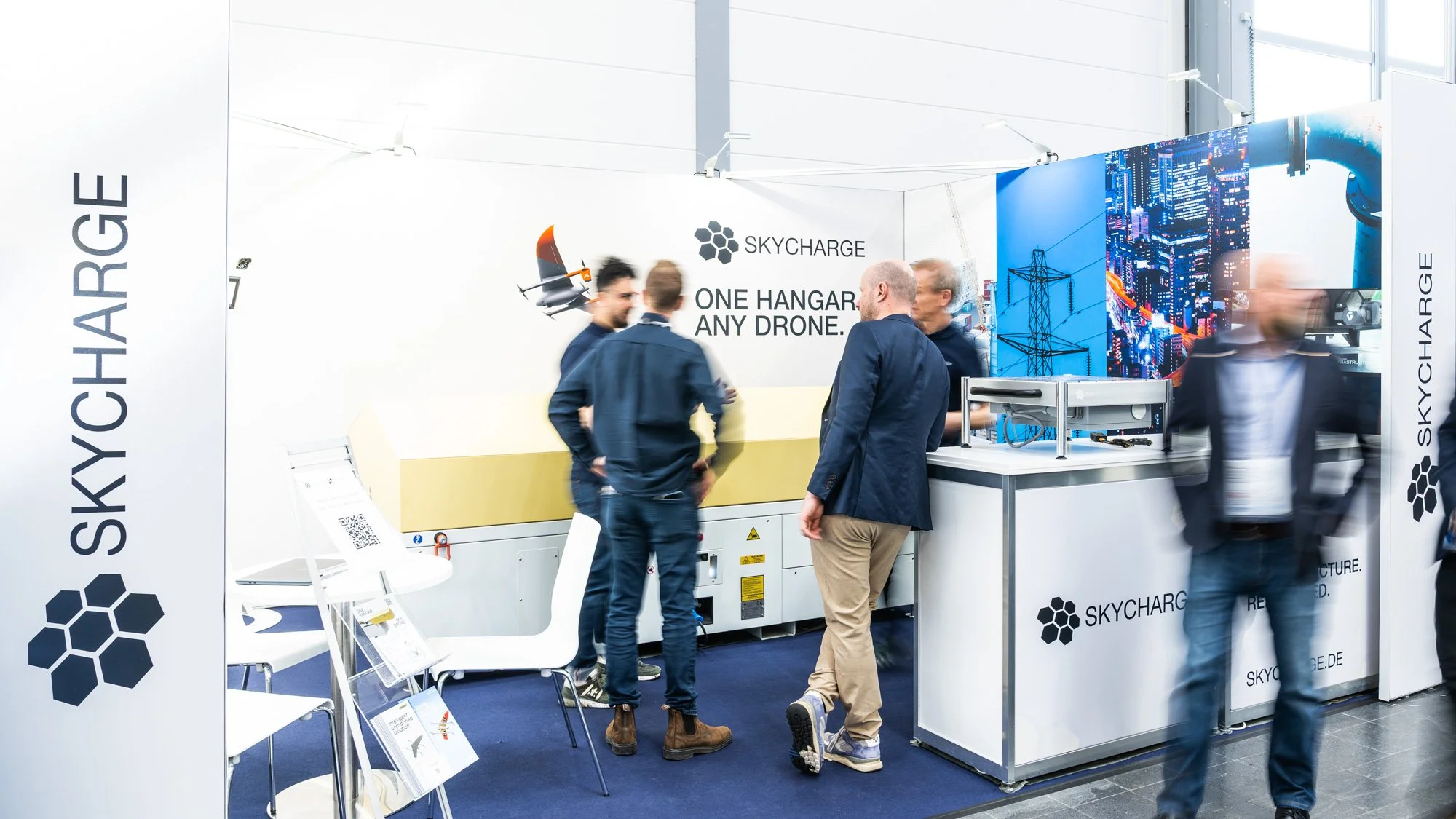
XPONENTIAL Europe 2026 — conversations around autonomous drone infrastructure in practice.
What stood out most was how consistently discussions moved beyond drones as standalone products. Customers are no longer evaluating aircraft in isolation. Instead, they are thinking in terms of complete operational systems.
Across conversations, the same needs surfaced repeatedly: automated docking, automated charging, remote storage, and infrastructure that supports continuous operations with minimal human intervention. In other words, operational autonomy is increasingly defined end-to-end.
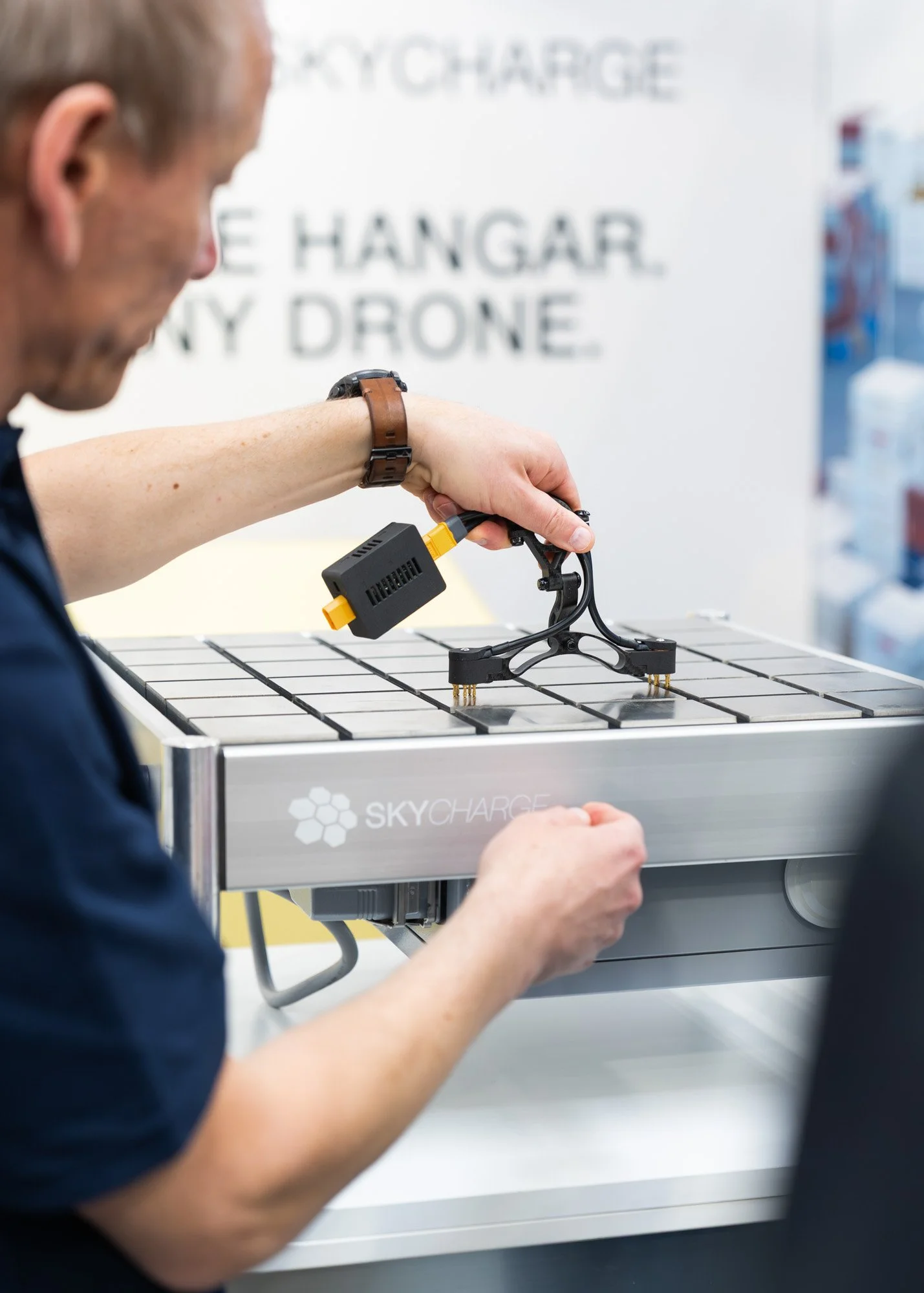
Discussions consistently focused on how full operational systems come together in real-world deployments.
One moment captured this transition particularly well. A CTO of a major drone manufacturer told us: “We don’t want to become a docking company.”
It’s a perspective that reflects a broader industry reality. Building aircraft is one challenge. Building and maintaining the infrastructure layer that keeps operations running is a fundamentally different business.
As a result, a strategic divide is becoming more visible. Some OEMs will aim to own the full stack, extending from aircraft to infrastructure. Others will stay focused on their core strengths—aircraft performance and mission capabilities—and rely on partners to deliver the infrastructure layer around the drone.
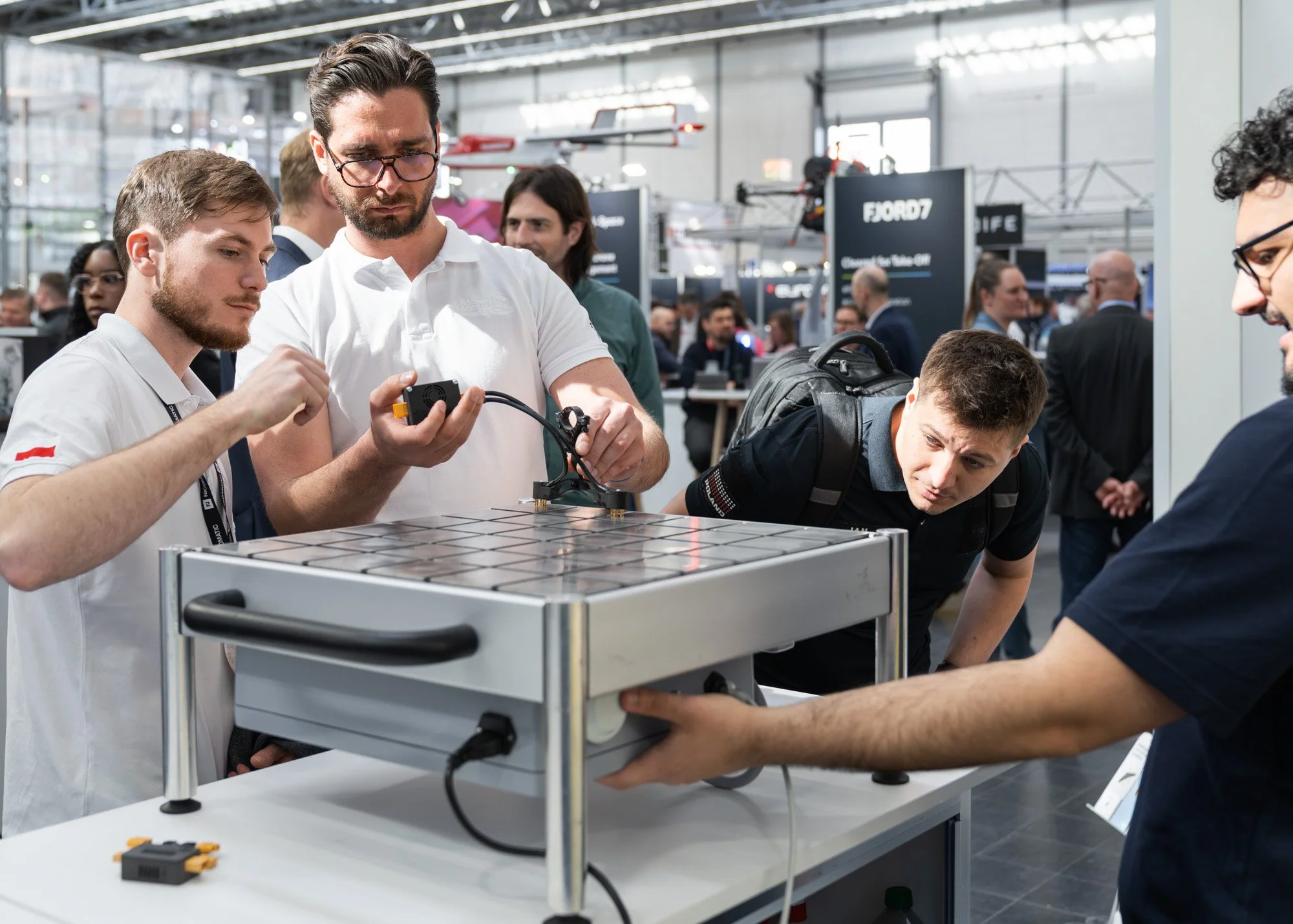
Conversations with OEMs and operators reflected a growing focus on partnerships around infrastructure.
This shift also signals something deeper: the ecosystem is becoming more specialized. Ground interoperability is no longer a secondary feature—it is becoming a requirement for scaling operations across different drone platforms and use cases.
Another consistent signal from the event was the level of interest in indoor applications. Conversations around smaller drones and controlled environments came up repeatedly, suggesting that this segment may scale faster than previously expected.
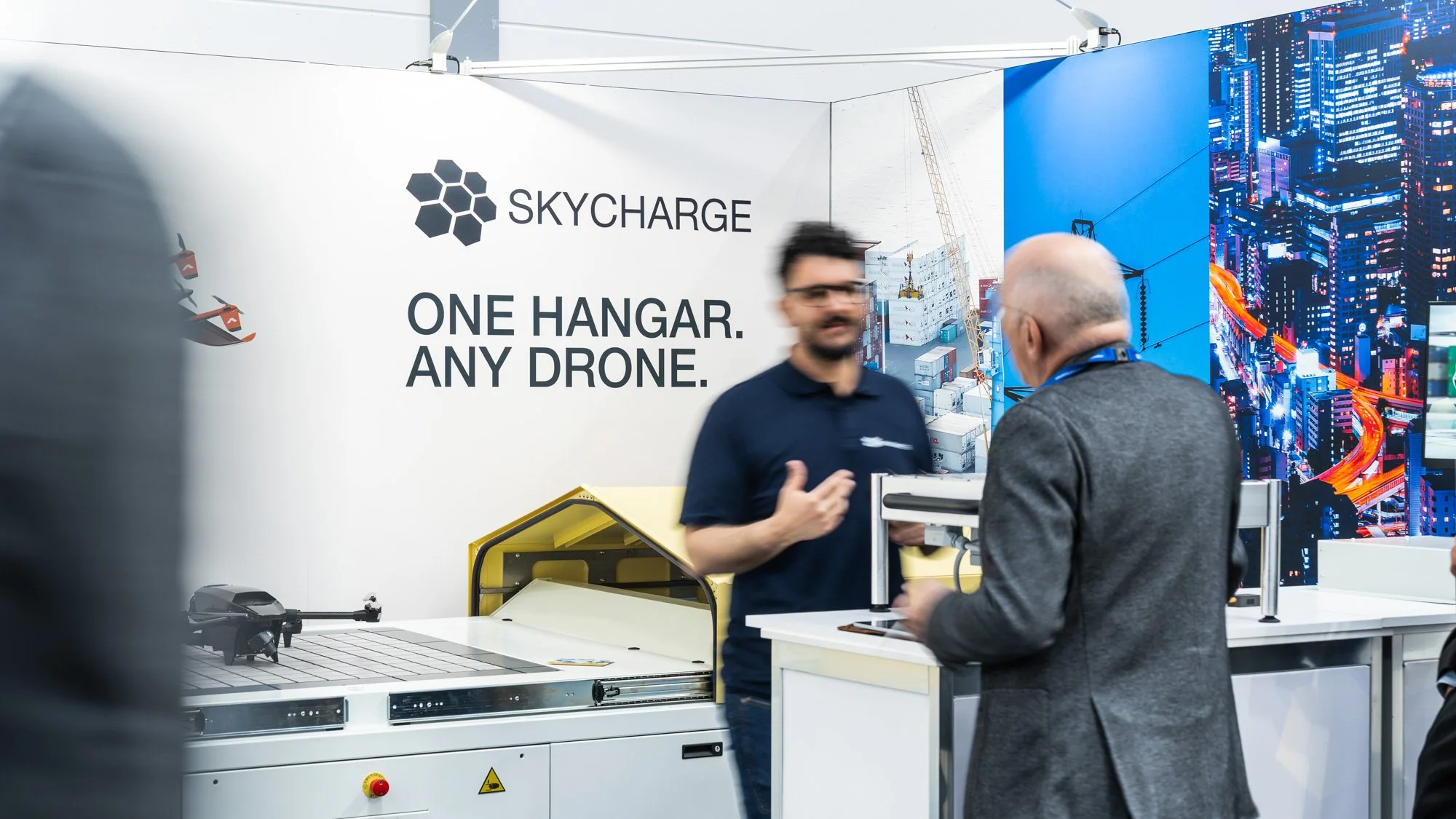
Live discussions at XPONENTIAL Europe 2026, with the Skycharge Hangar as part of real-world infrastructure conversations.
More broadly, XPONENTIAL made clear that the market is maturing. The key question is no longer just what a drone can do in the air, but how the entire system performs over time—continuously and reliably, and with as little manual intervention as possible.
Autonomy, in this context, is also defined by the infrastructure that enables repeatable, low-friction operations on the ground.
If there is one takeaway from XPONENTIAL Europe 2026, it is this: the future of drone operations will depend not only on advances in aircraft, but on how effectively the full operational system is designed, deployed, and integrated.